Collection 02 · Bedrooms
Warm Minimalist Bedroom Ideas: 10 AI-Designed Concepts
A study of oatmeal linen, pale oak, rattan, warm plaster, and the changing character of natural light from morning to night.
A warm minimalist bedroom succeeds when the room feels restful before any styling is added. The ten concepts here use low bed frames, tactile linen, quiet timber, and carefully directed light to make that restraint visible. They continue the material language of our warm minimalist living room collection, but the bedroom asks for softer contrast and fewer visual interruptions. What I find most convincing across this set is how often one practical decision—a lower bed, an uncovered window, or a single bedside lamp—does more than several decorative objects could.
AI content disclosure: Every image in this article was generated with an AI image model, selected in a one-shot production test, and reviewed by image-feed. The text was edited against the final images so that observations refer to visible details rather than generic style claims. These are design references, not photographs of built interiors or purchasable products.
Low Beds and Open Breathing Room
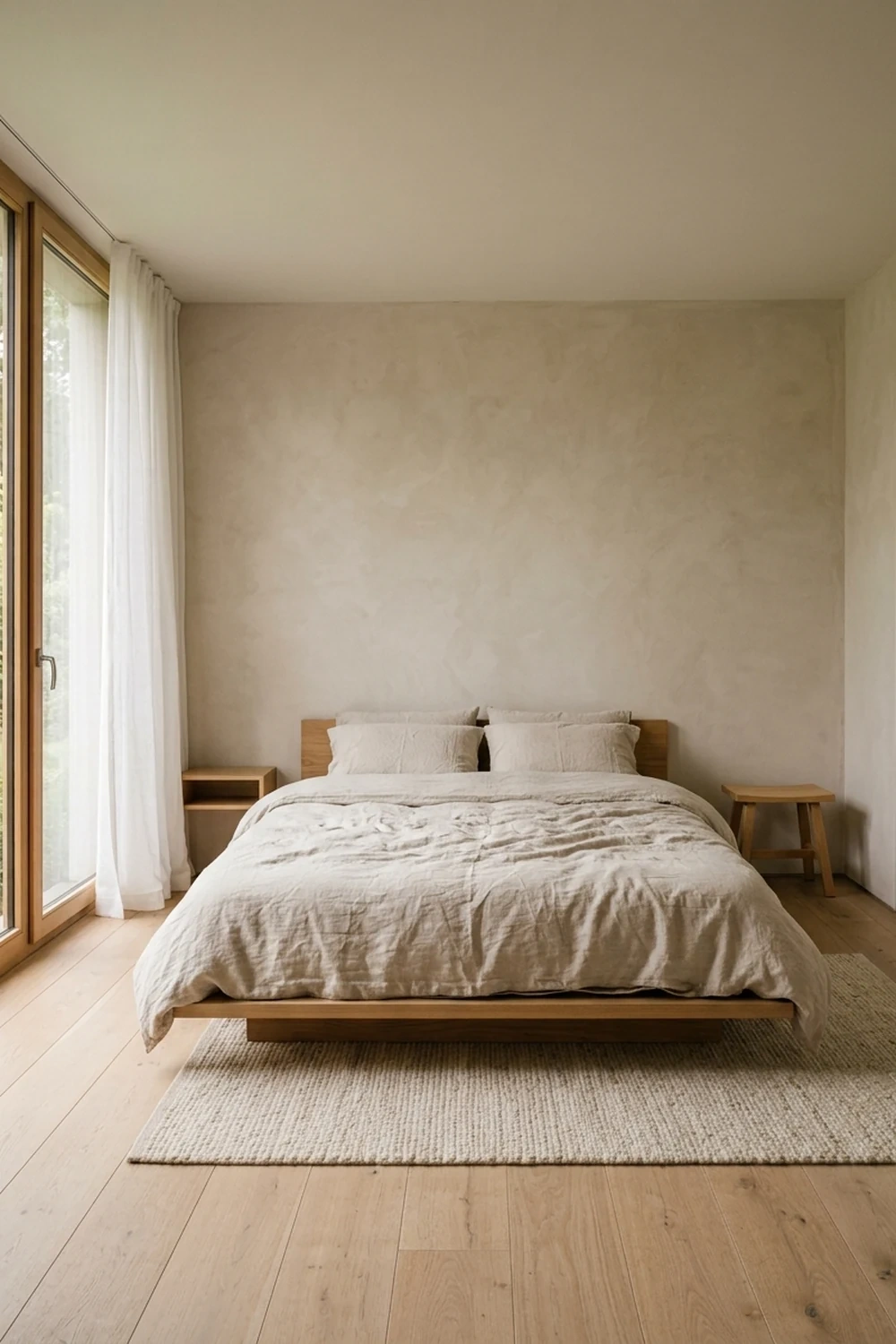
The opening bedroom establishes the collection’s most useful proportions. A low oak platform bed occupies the lower center of the room, while the tall plaster wall and full-height glazed opening preserve a generous field above it. Oatmeal linen keeps the bedding from reading as bright white, and the rug is close enough in value that it supports the bed rather than outlining it. The added bedside units make the scene slightly busier than the strict brief, yet the overall lesson remains clear: keep the bed visually low and let the largest wall stay mostly empty.
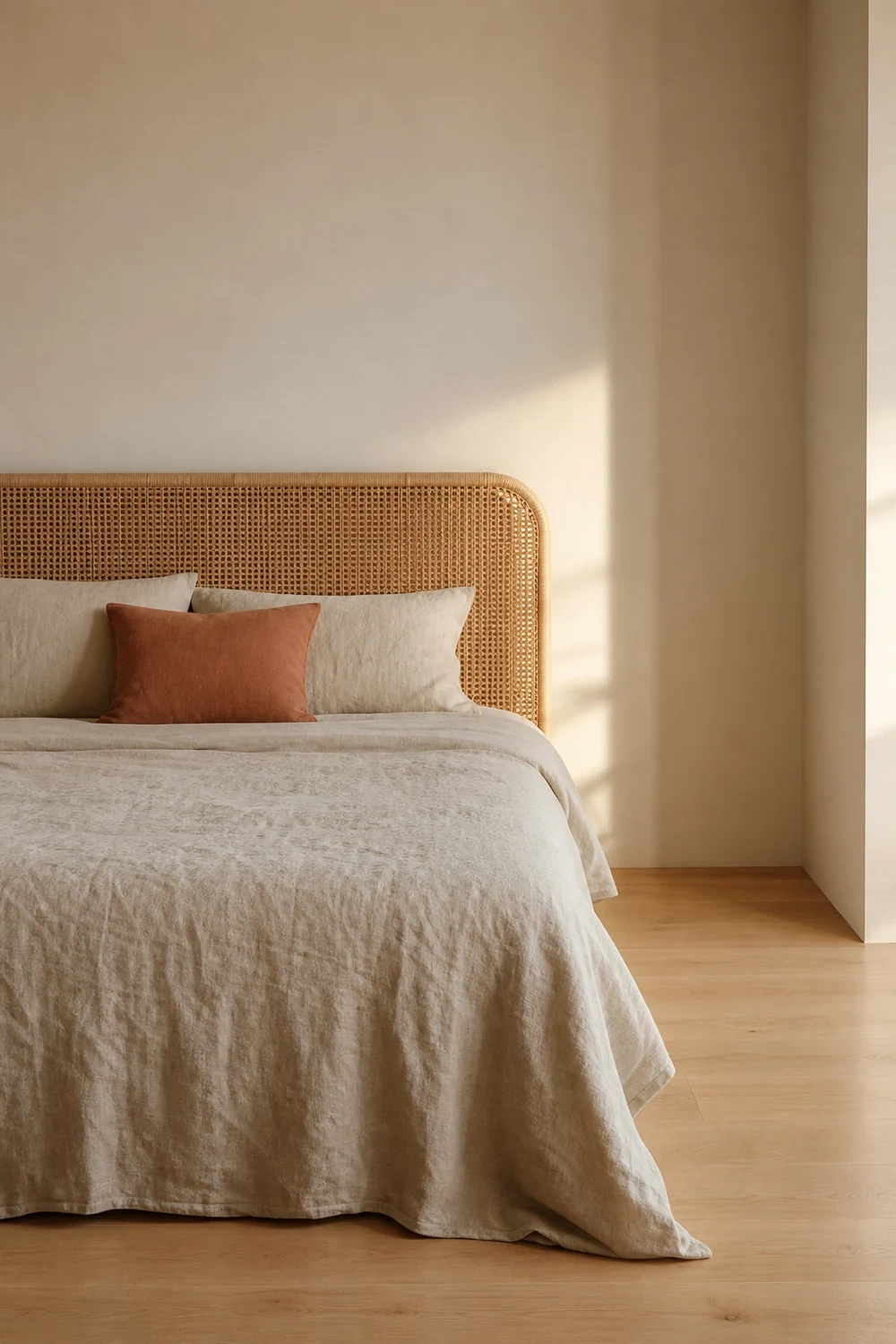
The rattan-headboard room is warmer and more directional. Golden-hour light enters from the right, striking the woven fibers and forming defined patches across the plaster. One muted terracotta cushion supplies the only saturated note, so it works as a focal point rather than a theme. Natural rattan can quickly become decorative when repeated across baskets, pendants, and accessories; here it is strongest as one broad textured plane behind the bed. Pair it with rumpled linen and plain walls, then allow daylight to reveal the weave.
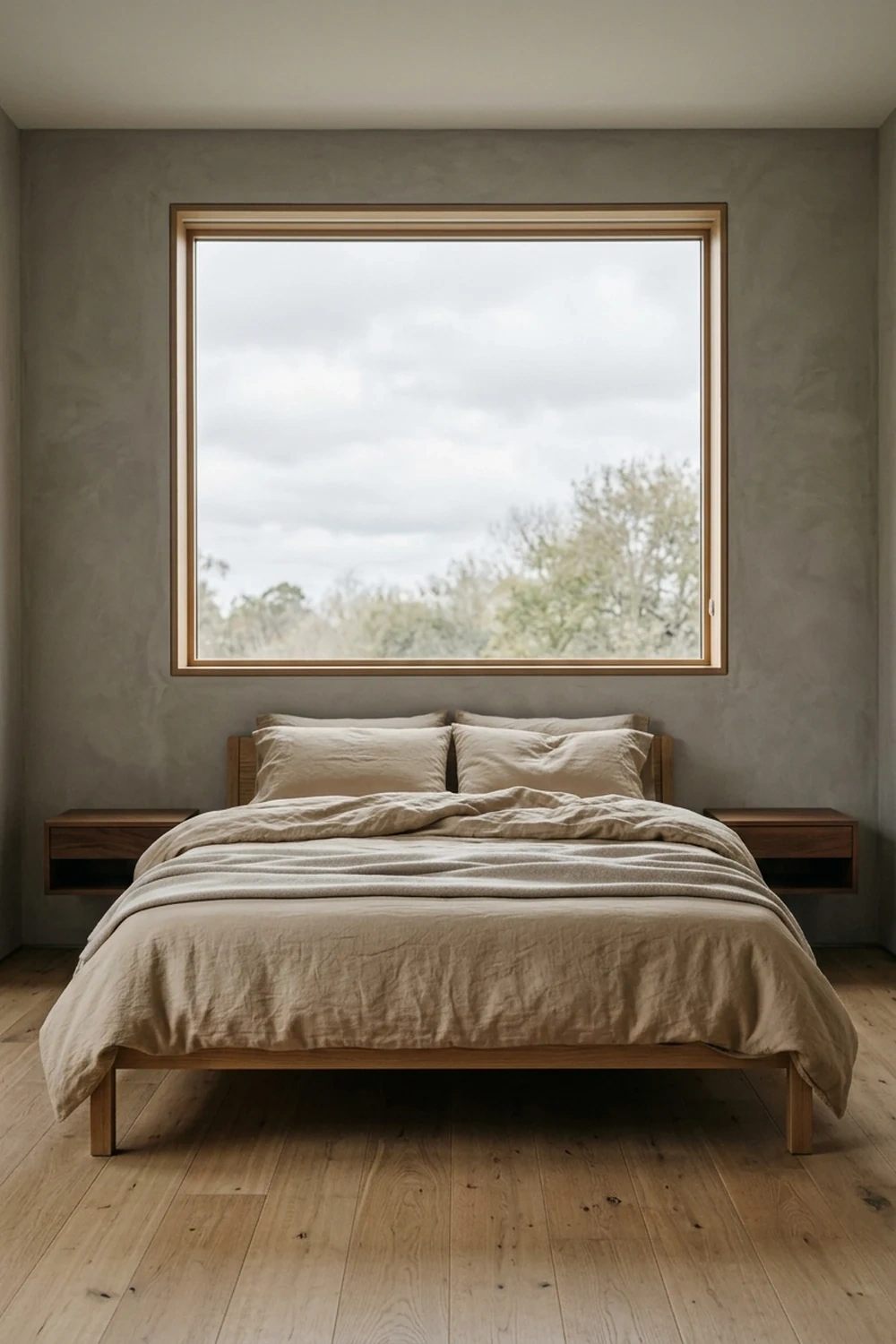
The third concept cools the palette without losing warmth. A large uncovered window sits directly above the bed, admitting flat overcast light that makes the warm grey limewash appear deep and mineral. Sand-colored linen bridges the grey wall and oak floor. The floating nightstands were not part of the original brief, but their dark recesses show why storage needs careful handling in a quiet room: open cavities become strong graphic marks. Closed, wall-colored, or very simple bedside storage would keep the window and bed as the dominant shapes.
Bedside Vignettes and Window Corners
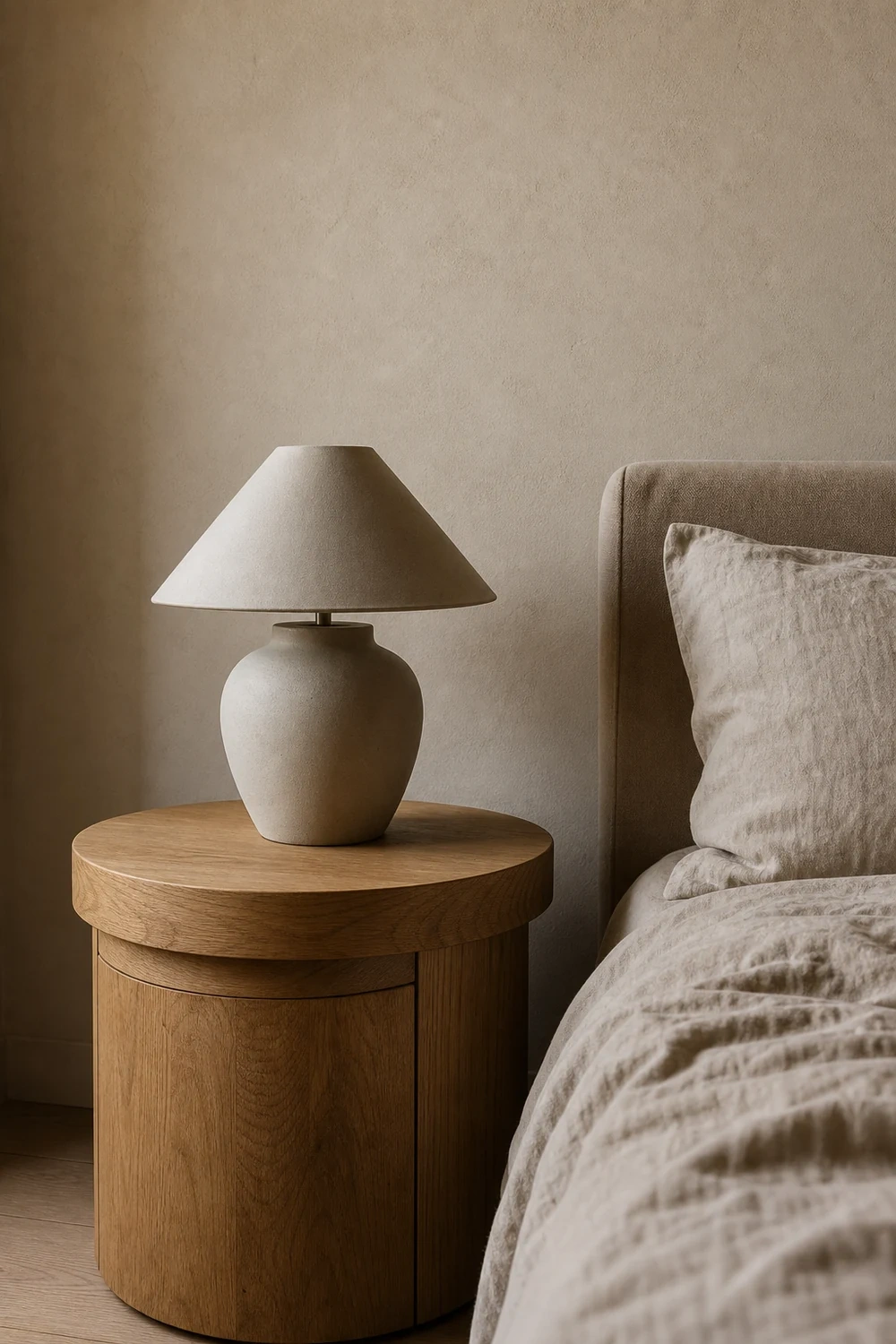
A medium bedside view makes scale easier to judge. The cylindrical oak nightstand is only large enough for one matte ceramic lamp, and the lamp remains switched off so its rounded base reads as an object rather than a light effect. The bedding enters from the left as a soft, irregular mass, while the plaster wall provides a calm background. This is a useful editing rule for small bedrooms: make the bedside surface fit the essentials instead of leaving enough room to accumulate styling. One lamp and clear reach from the bed are sufficient.
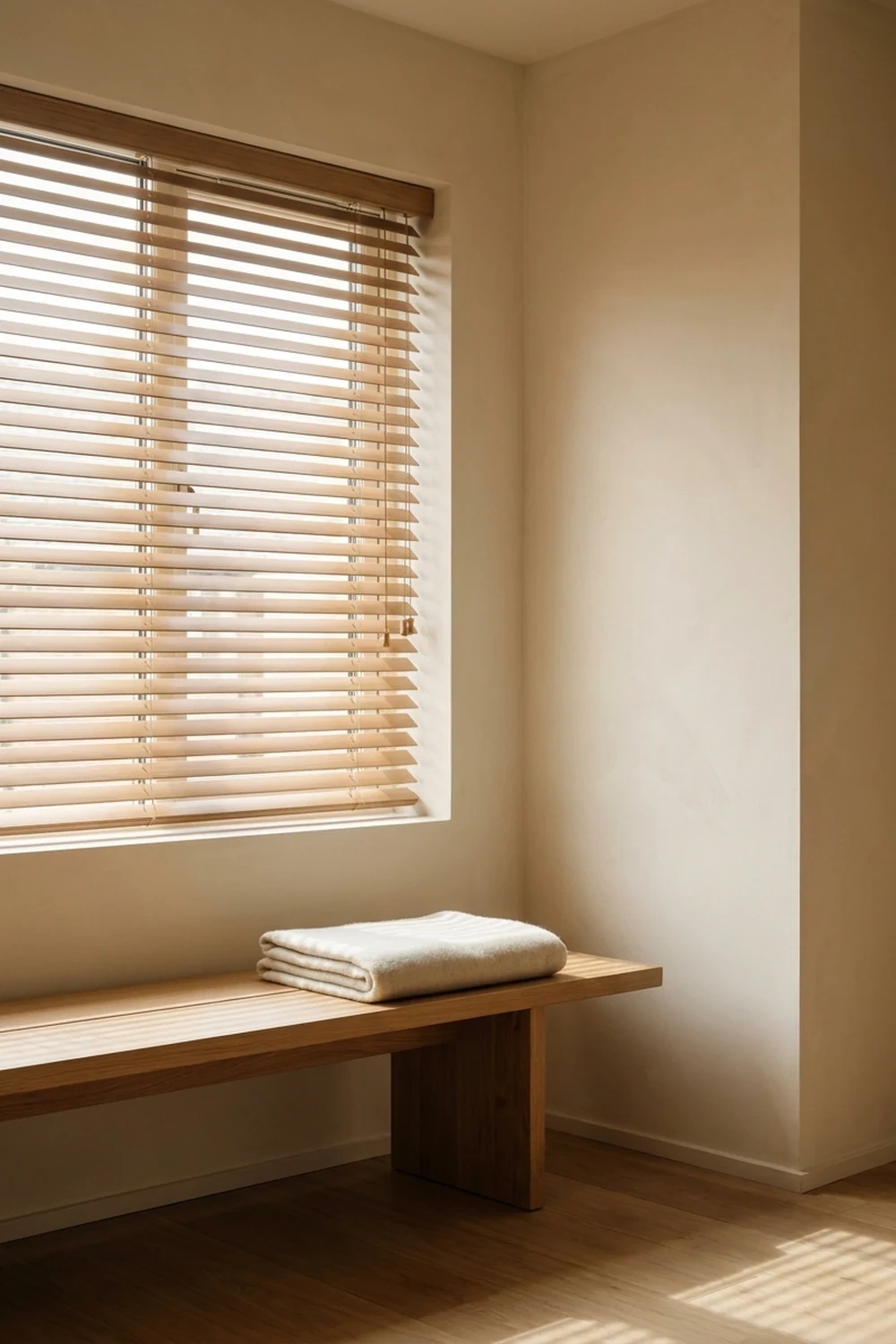
The window corner uses a low oak bench beneath slatted blinds, topped with one precisely folded undyed wool throw. Striped late-afternoon light crosses the bench, wall, and floor, creating detail without additional furniture. Because the bench is long and shallow, it reinforces the window’s horizontal line and gives the folded textile a clear purpose. A similar arrangement can serve as a place to set tomorrow’s clothes or sit briefly, but it should not become an open shelf. Leaving most of the surface empty is what makes the light pattern visible.
Linen, Rattan, and Plaster at Close Range
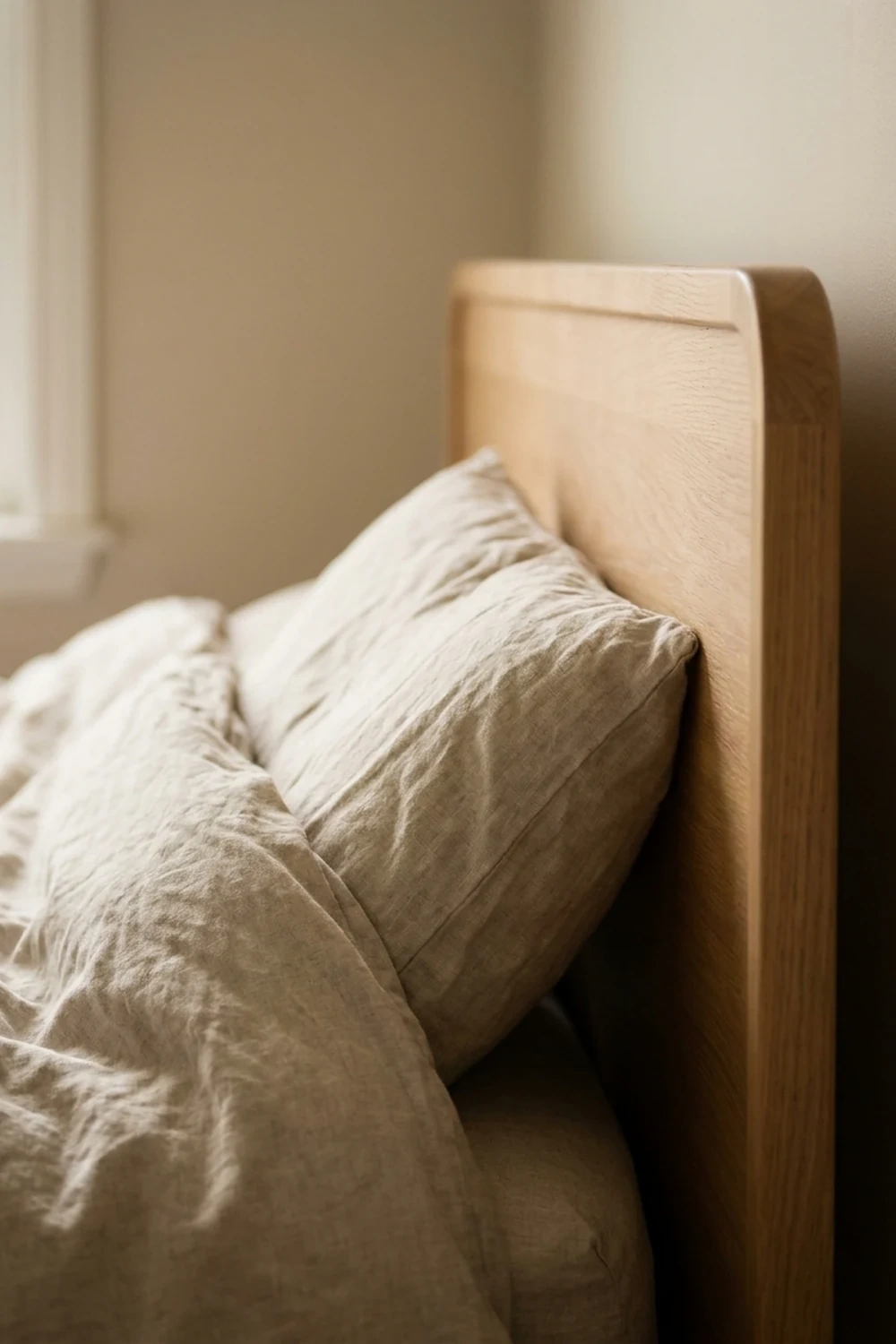
Close views reveal whether a neutral room has enough material variation. The linen detail shows creases, softened seams, and subtle changes in oatmeal tone against the rounded corner of a pale oak headboard. Neither surface is glossy, but their structures differ: the fabric folds in loose, changing planes while the timber holds a firm edge and directional grain. That contrast keeps a narrow palette from becoming flat. Washed linen is especially effective because it looks comfortable when imperfect; precise, hotel-tight bedding would remove much of the room’s warmth.
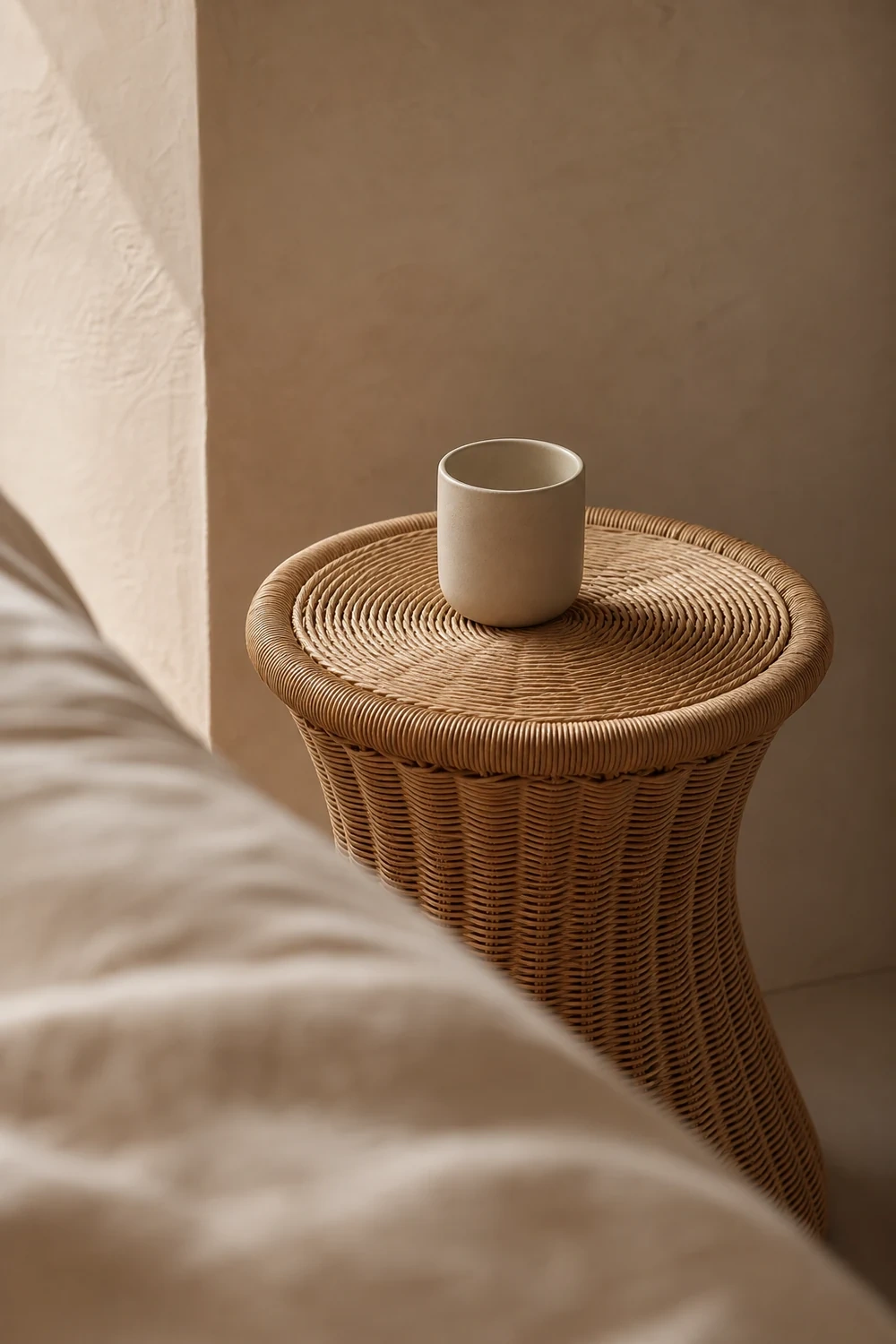
The rattan stool vignette repeats that principle on a smaller scale. A single matte ceramic cup sits on the woven top while the edge of the linen bed falls softly out of focus in the foreground. The cup’s smooth cylinder, the stool’s dense weave, and the fabric’s blurred folds form three distinct textures within one narrow family of beige and brown. A small stool can replace a conventional nightstand when storage is unnecessary, but its top should remain genuinely usable. One cup, book, or lamp is enough; a cluster would conceal the weave that gives the piece its character.
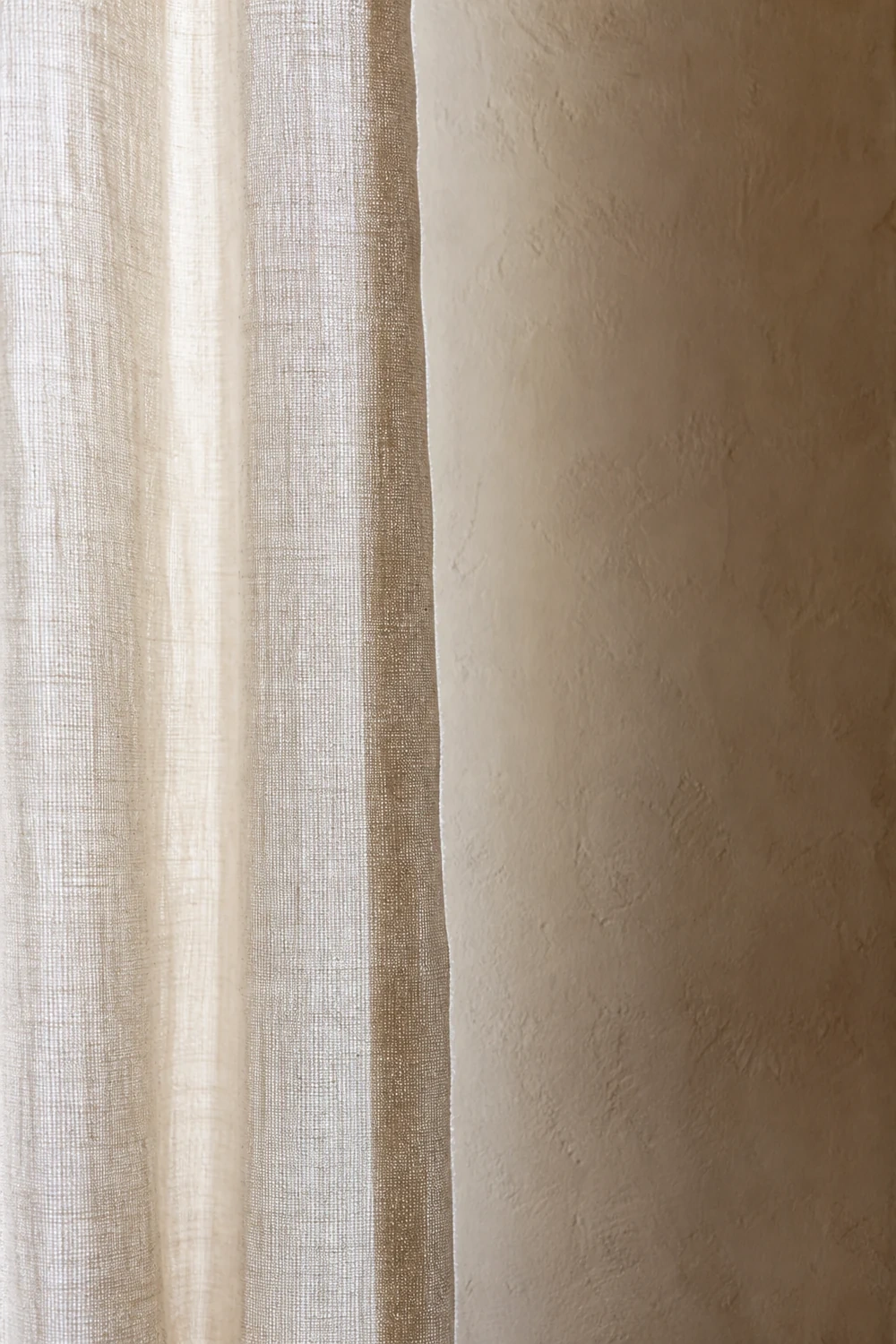
The curtain-and-plaster study removes furniture entirely. Sheer natural linen enters from the left, meeting a warm wall whose fine irregularities become visible in diffused daylight. The useful idea is not simply to choose beige curtains; it is to let two slightly different translucent and opaque surfaces share the same undertone. Hang the fabric with enough fullness to form broad folds, avoid a bright optical white, and allow the wall finish to remain matte. The resulting shadow gradient becomes the decoration, changing slowly through the day without occupying any floor space.
Evening Glow and the First Light of Dawn
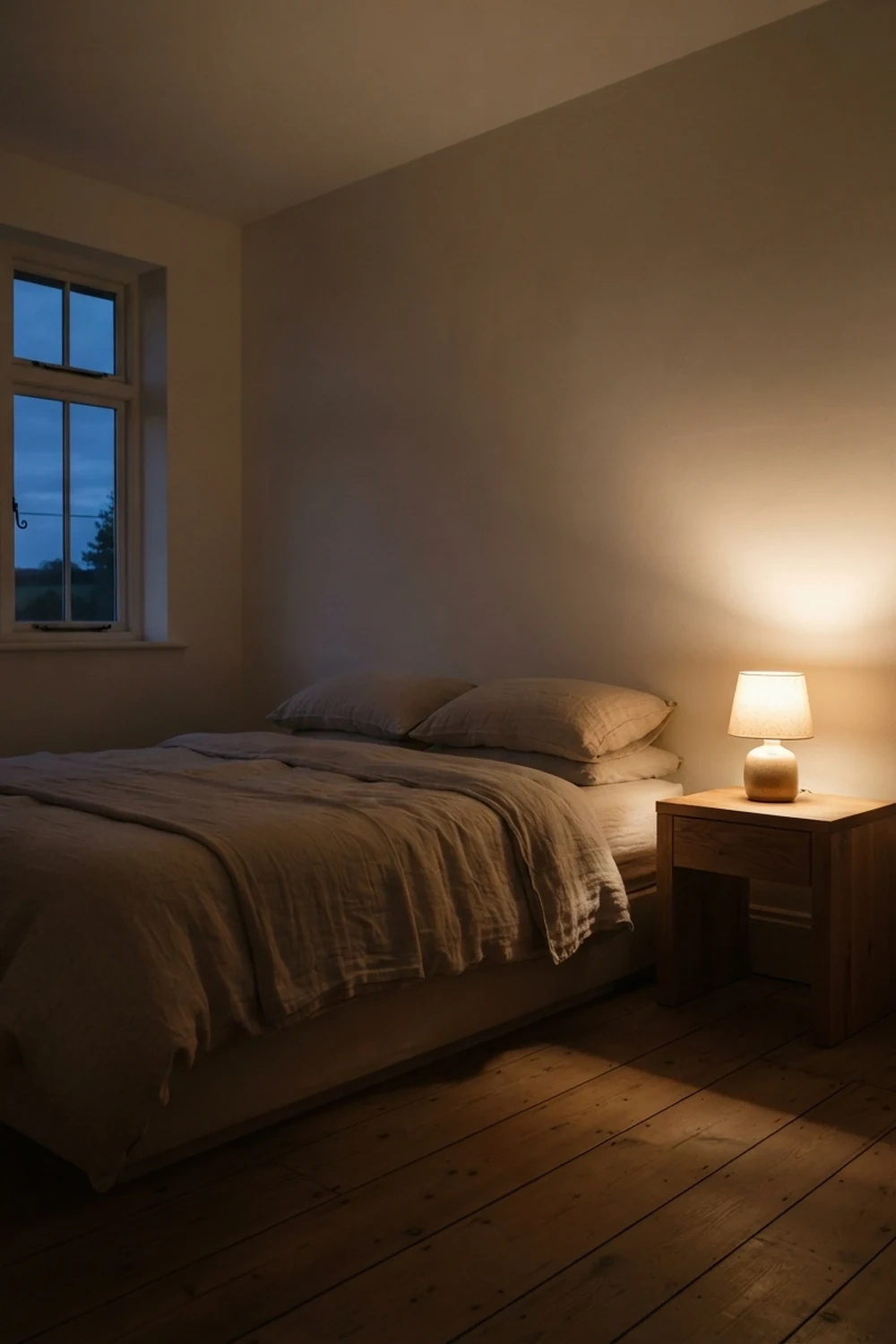
The evening room shows why a low lamp often works better than uniform ceiling light. Blue dusk remains visible through the window while one ceramic lamp warms the oak nightstand, bedding edge, and a small area of floor. The light falls off naturally before reaching the far wall, leaving enough darkness for the room to feel settled. Choose a shaded source near mattress height, use a warm bulb, and resist compensating for every shadow. The contrast between cool exterior light and one warm interior pool gives neutral linen more depth than a bright overhead fixture would.
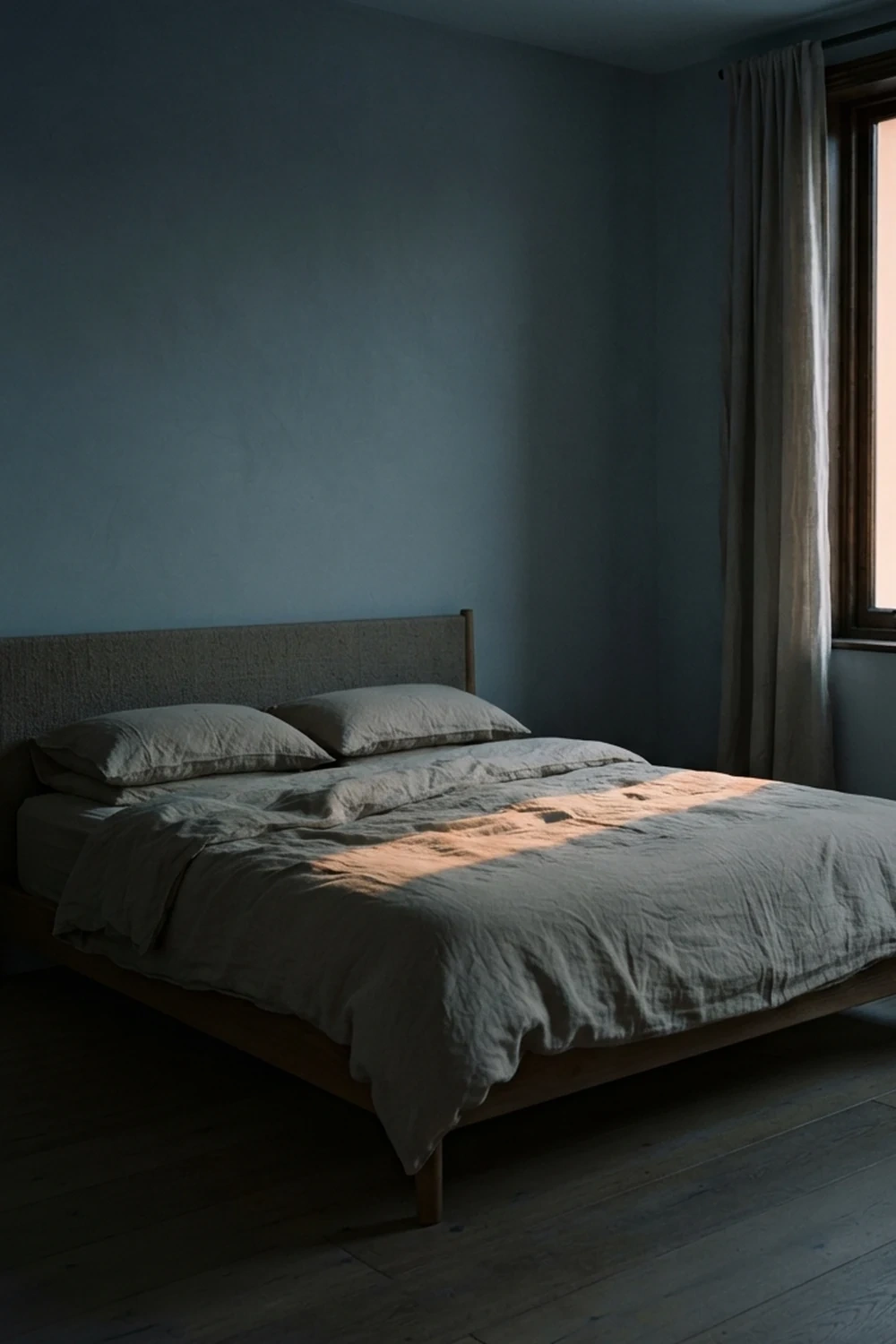
The final image reverses that relationship. The room is still blue-grey before sunrise, but a narrow peach band crosses the linen duvet from the right-hand window. Curtains frame the opening without hiding it, and the final crop removes the unrelated cup and stool that appeared at the source edge, restoring the intended emphasis on light, bed, and wall. Dawn light is temporary and therefore especially effective in a restrained room. With fewer objects interrupting the surfaces, a brief change in color can define the entire composition and make the same bedroom feel different from hour to hour.
Together, the ten concepts suggest a practical order for designing a warm minimalist bedroom: establish a low, comfortable bed; select one or two natural materials with visible texture; protect empty wall and floor area; then plan light for morning, reading, and evening. Color can stay close to oatmeal, sand, warm grey, and pale oak because linen folds, timber grain, rattan weave, and plaster already provide variation. The result should feel edited, not empty. Browse the full gallery → for more AI-generated references built around material, proportion, and light.